Are Nitrile Gloves Safe For Food Handling? Here’s What To Know
Blog
6 MIN READ
SHARE:
Are Nitrile Gloves Safe For Food Handling? Here’s What To Know
Quick Summary
Nitrile gloves can be safe for food handling when the specific product is intended for food contact and meets applicable requirements. Their latex-free construction, puncture resistance, grip, and range of thicknesses make them practical for many kitchens and food-processing operations. Buyers should verify food-contact suitability, choose the right thickness and fit for the task, and use single-use gloves correctly by changing them when soiled, damaged, or switching tasks.
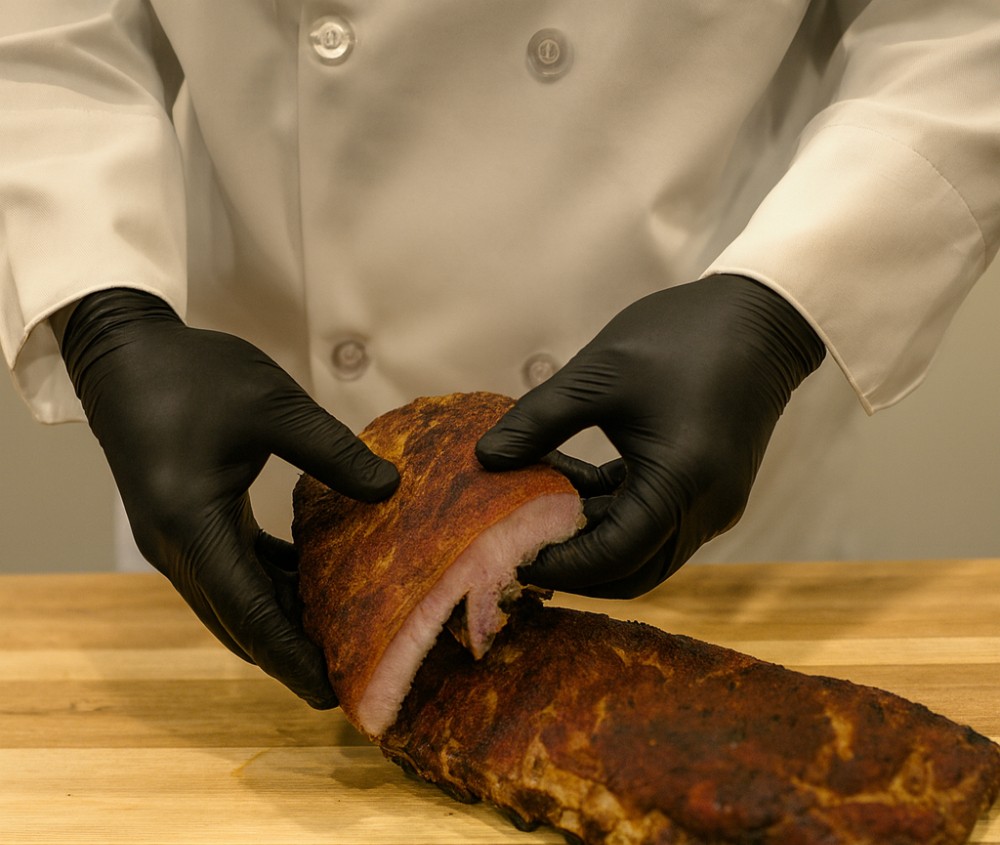
Are nitrile gloves safe for food handling? Yes—when the specific glove is made and represented for food-contact use and is used correctly. Restaurant owners, food processors, and safety managers should verify product documentation rather than assume every nitrile glove is food grade.
Material alone does not guarantee suitability. Food-contact labeling, construction quality, manufacturing consistency, and the requirements that apply in your jurisdiction all contribute to safe food handling.
Gloves act as a barrier between hands and food products. That barrier must remain intact through prep work, exposure to oils, moisture, and repeated movement. Choosing the right glove material directly affects contamination control, worker comfort, and operational efficiency.
Nitrile is a synthetic rubber that does not contain natural rubber latex proteins. Its latex-free construction can reduce concerns for workers or customers with natural rubber latex sensitivity while still providing a close fit and good dexterity.
Strength is another major advantage.
Nitrile gloves offer strong puncture and tear resistance for many disposable-glove tasks. Workers handling raw ingredients, packaging, or abrasive prep surfaces benefit from a glove that holds up through normal use. Disposable nitrile gloves should not be treated as cut-resistant protection against knives or other sharp tools.
Food operations also value consistency. When gloves perform the same way across every case, workflow becomes more predictable. That reliability supports better hygiene practices and fewer interruptions during service.
Glove America offers SureCare nitrile gloves in multiple colors and thicknesses for food service and other professional applications.
Food-Grade Nitrile Gloves: Compliance and Safety
Gloves used in food handling should be suitable for food contact and comply with the rules that apply to the operation. The FDA Food Code is a model used by state and local jurisdictions, so food businesses should verify both product documentation and their local food-handling requirements.
Buyers should confirm that a specific nitrile glove is identified by the manufacturer for food-handling use. ASTM and ISO standards can provide useful information about glove performance, testing, or quality systems depending on the product grade, but those standards do not by themselves establish food-contact suitability.
Powder-free construction is commonly preferred in food environments because it avoids glove powder that could leave residue on food, equipment, or prep surfaces.
This is why the question “Are powder-free nitrile gloves food safe?” comes up frequently. Powder-free is a useful feature, but it is not the only criterion: the specific glove should also be intended for food contact and meet applicable requirements.
How Nitrile Performs in Real Food Prep Conditions
Food preparation involves constant hand movement, temperature changes, and exposure to moisture. Gloves should remain intact throughout routine prep conditions without slipping, tearing, or interfering with dexterity.
Nitrile performs well across a wide range of food-prep tasks and generally maintains good integrity around oils, fats, and moisture. Chemical resistance varies by formulation and chemical, however, so cleaning or sanitation exposures should be checked against the glove manufacturer’s compatibility information when relevant.
Grip becomes especially important when handling wet or greasy ingredients. Textured nitrile gloves can improve surface traction and control during food preparation, especially when fit and size are appropriate for the wearer.
Single-use gloves are only one part of a food-safety program. They should be changed between incompatible tasks and discarded when damaged, soiled, or after an interruption in the operation.
Nitrile vs Vinyl and Other Disposable Options
When buyers compare nitrile vs vinyl for food handling, the main tradeoff is usually durability versus cost. Vinyl can suit short-duration, low-risk tasks, while nitrile generally offers stronger puncture resistance, a closer fit, and more consistent performance for demanding prep work.
Nitrile has replaced older glove materials in many food handling environments because of its latex-free profile and durability. For operations still evaluating latex, see our guide on using latex gloves in food services.
Nitrile disposable gloves offer a practical balance of strength, flexibility, and dexterity for tasks ranging from food prep to packaging and service. Buyers who want a lower-cost hybrid option can also compare nitrile/vinyl blend gloves.
Color also influences glove selection. Blue nitrile gloves are commonly used because they are easy to distinguish from many food products, which can help teams notice glove fragments if a tear occurs.
Why Nitrile Glove Quality and Sourcing Matter
Questions about whether a specific box or brand of nitrile gloves is food safe should be answered from the product labeling and documentation—not the brand name, color, or nitrile material alone. Buyers should verify that the glove is intended for food-handling use before purchasing for a kitchen or processing facility.
Not all nitrile gloves are created equal. Lower-quality products may have inconsistent thickness, sizing, or barrier performance. Those inconsistencies can increase glove changes, waste, and the chance of failure during use.
This is why sourcing matters as much as material. Reliable suppliers should provide consistent product specifications and clear information about grade and intended use. That consistency supports purchasing control, food-safety procedures, and operational efficiency.
Choosing Nitrile Glove Thickness and Fit
Nitrile gloves come in several thickness levels, commonly measured in mils. Heavier gloves generally emphasize durability, while thinner options can improve tactile sensitivity and dexterity. Food operations should balance those characteristics against the tasks employees perform each day.
A 5-mil glove, for example, can offer a useful balance of durability and flexibility for general food handling. Heavier disposable nitrile options may be preferred for tougher prep or cleanup where extra puncture and tear resistance is useful, but disposable nitrile should not be treated as cut-resistant or heat-protective PPE.
For one food-service-ready option, review Glove America’s Premium Blue 5 MIL nitrile gloves, which feature textured fingers and are listed for food service and food processing applications.
Fit also affects glove performance. A secure, comfortable fit supports dexterity and control and can reduce the distraction caused by gloves that are too loose or too tight during long shifts.
Bulk Purchasing and Supply Reliability
Food service operations rely on a steady supply of gloves to maintain hygiene procedures. Running out of gloves or receiving inconsistent product quality can disrupt workflow and complicate purchasing and sanitation routines.
Bulk purchasing allows businesses to maintain inventory without frequent reordering. However, this approach requires confidence in supplier reliability. Buyers should look for consistent specifications, case quantities, sizing availability, and documentation from shipment to shipment.
When evaluating nitrile gloves for food use, buyers should also prioritize suppliers with strong inventory levels and dependable fulfillment. That reduces the risk of substitutions, delays, or gaps in the sizes and thicknesses employees rely on.
Why Food Service Operations Continue to Choose Nitrile
Many food service operations continue to standardize on nitrile because it combines food-prep practicality, a latex-free construction, and a broad choice of thicknesses, textures, colors, and sizes.
Vinyl still serves niche, low-risk applications, while nitrile bridges the gap by offering durability and strong everyday performance without natural rubber latex proteins.
For businesses, the goal is not simply to choose nitrile by name. It is to standardize on a food-contact-suitable glove with the right fit, thickness, grip, and supply reliability for the operation.
Buy Food-Grade Nitrile Gloves From Glove America
Glove America supplies businesses that depend on reliable disposable gloves every day. Our SureCare nitrile selection includes food-service options in multiple thicknesses, colors, and sizes, with product-level information to help buyers match the glove to the application.
We maintain a large in-stock inventory, and most orders ship the same day they are placed. That fast fulfillment helps restaurants, processors, and other commercial buyers keep essential glove sizes on hand.
Glove America also offers competitive bulk pricing and more than 25 years of industry experience. Buyers can compare specifications and case quantities across our disposable gloves to build a more consistent purchasing program.
If you need help selecting food-grade nitrile gloves or planning a bulk order, Glove America can help you compare material, thickness, fit, and intended use so you can choose the right option for your operation.
FAQs
Properly manufactured nitrile gloves intended for food contact should not impart unwanted taste or odor during normal use. If a glove has a strong odor, visible contamination, or damaged packaging, do not use it for food handling.
They can be used for routine food prep and service, but disposable nitrile gloves are not thermal-protection gloves. Do not rely on them for handling hot pans, open flames, steam hazards, or other high-heat tasks that require appropriate heat-resistant PPE.
Change single-use nitrile gloves when they are damaged or soiled, after interruptions, and when switching between tasks that could cause cross-contamination—for example, moving from raw animal food to ready-to-eat food. Follow the food code adopted in your jurisdiction and your facility’s procedures.
Some are. Nitrile material alone does not make every glove food grade. Verify that the manufacturer identifies the glove for food handling and that it meets applicable FDA food-contact requirements. ASTM standards may address glove performance or testing, while ISO standards may address relevant quality systems; neither replaces product-specific food-contact verification.
Yes, when the specific powder-free nitrile glove is intended for food contact and meets applicable requirements. Powder-free construction helps avoid powder residue, but “powder-free” by itself does not make a glove food safe.
Nitrile is often preferred when avoiding natural rubber latex proteins is important, and it also offers strong puncture resistance and a close fit. The best choice still depends on the specific task, product grade, local requirements, fit, and the facility’s allergen and glove-use policies.